
Blogs
7 Powerful Steps: How Is Hardwood Charcoal Made?

Table of Contents
H2: The Science Behind Carbon-Rich Fuel
- 1. Selecting Suitable Natural Hardwood
- 2. Preparing the Wood for Carbonization
- 3. The Carbonization Process
- 4. Cooling and Stabilizing the Charcoal
- 5. Sorting and Quality Inspection
- 6. Packaging for Storage and Distribution
- What Determines Hardwood Charcoal Quality?
- Common Uses of Hardwood Charcoal
- Choosing a Reliable Supplier
- Conclusion
How Is Hardwood Charcoal Made From Natural Hardwood?: powerful steps hardwood
Hardwood Charcoal is made by transforming carefully selected natural hardwood into a carbon-rich fuel through controlled heating with limited oxygen. This traditional process removes much of the moisture and volatile compounds while preserving a concentrated carbon structure that burns efficiently.
H2: Sustainable Sourcing and Ethical Production
Understanding how Hardwood Charcoal is produced helps buyers evaluate quality, consistency, and suitability for grilling, restaurants, food service, and wholesale applications. Each stage, from wood selection to final packaging, can influence the finished product.
1. Selecting Suitable Natural Hardwood
The process begins with hardwood that is suitable for carbonization. Producers typically look for clean, dry, dense wood because the raw material strongly affects charcoal density, burn behavior, and durability.
Wood should be responsibly sourced and free from paint, chemical treatments, plastics, or other contaminants. Consistent raw materials help manufacturers create more uniform batches for commercial customers.
2. Preparing the Wood for Carbonization
After selection, the wood is cut into manageable sizes and prepared for controlled carbonization. Depending on the production method, pieces may be dried naturally or through a controlled drying process to reduce excess moisture.
Lower moisture allows the heating stage to work more efficiently. Proper preparation can also help produce Hardwood Charcoal with more consistent density and fewer quality variations.
3. The Carbonization Process
Carbonization is the key stage in making charcoal. The prepared hardwood is heated at high temperatures while oxygen is restricted, causing moisture and volatile substances to leave the wood.
Instead of allowing the wood to burn completely, the controlled environment encourages thermal decomposition. The remaining material becomes a carbon-rich solid with characteristics suitable for use as fuel.
4. Cooling and Stabilizing the Charcoal
Once carbonization is complete, the charcoal must cool under controlled conditions. Exposing hot charcoal to excessive oxygen too quickly can cause unwanted combustion and reduce the amount of usable product.
Careful cooling protects the structure of the charcoal and prepares it for handling. This stage is particularly important for commercial production, where consistency across batches matters.
5. Sorting and Quality Inspection
After cooling, the charcoal is sorted according to size, appearance, density, and intended application. Broken pieces, excessive dust, and unsuitable material can be separated during this stage.
Quality checks may consider moisture, ash content, fixed carbon, burn performance, and overall cleanliness. For buyers, these factors provide useful indicators when comparing different Hardwood Charcoal suppliers.
6. Packaging for Storage and Distribution
The finished charcoal is packed according to the requirements of the market. Suitable packaging helps protect the product from moisture, contamination, and unnecessary breakage during storage and transportation.
For wholesale and export orders, packaging can also be customized by weight, bag type, labeling, and pallet configuration. Reliable handling from production through delivery helps preserve product quality.
What Determines Hardwood Charcoal Quality?
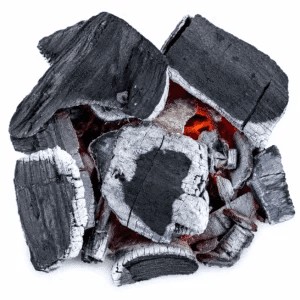
Several production factors can influence the final result. Buyers should consider the following points when evaluating a product:
- Wood quality: Dense, suitable hardwood can support longer and more consistent burning.
- Moisture: Lower moisture generally supports easier ignition and better storage stability.
- Carbonization control: Consistent heating can improve uniformity between batches.
- Ash and dust: Excessive residue may reduce the practical performance of charcoal.
- Piece size: Consistent sizing can make packing, handling, and application easier.
Common Uses of Hardwood Charcoal
High-quality charcoal can be used in restaurants, BBQ businesses, food-service operations, and other commercial applications. Its performance depends on the wood source, production method, specifications, and intended use.
For businesses purchasing in volume, it is useful to request product specifications and samples before placing a large order. This allows buyers to assess whether the charcoal matches their equipment and operational requirements.
Choosing a Reliable Supplier
A dependable supplier should be able to explain the raw material, production process, quality controls, packaging options, and available specifications. Clear communication is especially important for international buyers who need consistent supply.
CV BERKAH WIJIL can provide product information and sourcing support for customers seeking Indonesian charcoal. Visit our website to learn more about available products and business inquiries.
For general background on charcoal and carbonization, readers can also consult Wikipedia as an external reference.
Conclusion
Making Hardwood Charcoal from natural hardwood is a controlled process involving wood selection, preparation, carbonization, cooling, sorting, and packaging. Every stage can affect the charcoal’s consistency, cleanliness, and performance.
For buyers, understanding the production process makes it easier to ask the right questions and compare suppliers. Choosing well-prepared, consistently produced charcoal can support reliable performance across commercial applications.
Direvisi oleh adminDG
Related Posts
5 Top Reasons Coconut Charcoal Briquettes Rule Shisha Lounges
-
Posted by
 amirrehman98@gmail.com

7 Essential Tips for Choosing the Best Charcoal Briqquetes for Shisha and BBQ
-
Posted by
amirrehman98@gmail.com
How Charcoal Briquettes Are Made: 7 Premium Production Steps
-
Posted by
amirrehman98@gmail.com
7 Tips Coconut Charcoal Briquettes untuk Shisha dan Hookah
-
Posted by
amirrehman98@gmail.com

Hardwood Charcoal vs Coconut Charcoal 2026: Which Is Better?
-
Posted by
amirrehman98@gmail.com
7 Powerful Tips for Choosing Charcoal Cube Briquettes
-
Posted by
amirrehman98@gmail.com
7 Expert Tips for Choosing Charcoal for Commercial BBQ
-
Posted by
amirrehman98@gmail.com
Coconut Charcoal Briquettes: 7 Powerful Key Differences
-
Posted by
amirrehman98@gmail.com
Charcoal Premium 2026: Price Guide & Trusted Suppliers
-
Posted by
amirrehman98@gmail.com
7 Premium Hardwood Charcoal Briquettes Tips for Commercial BBQ
-
Posted by
amirrehman98@gmail.com
7 Powerful Charcoal Sticks Tips for Better Grilling
-
Posted by
amirrehman98@gmail.com
7 Proven Tips: How Hardwood Charcoal Is Made from Natural Wood
-
Posted by
amirrehman98@gmail.com