
Blogs
Hardwood Lump Charcoal: 7 Powerful Facts vs Briquettes

Table of Contents
- Key Differences Between Hardwood Lump Charcoal and Briquettes
- Materials and Production
- Heat, Burn Time, and Flavor
- Choosing the Right Charcoal
- Hardwood Lump Charcoal for Commercial Buyers
- Conclusion
Hardwood Lump Charcoal vs Briquettes: Key Differences Explained
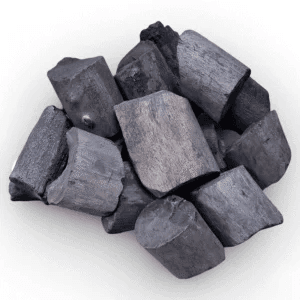
Hardwood Lump Charcoal and briquettes are two popular solid fuels for grilling, barbecue, restaurants, catering, and outdoor cooking. Although both provide useful heat, they differ in composition, burning characteristics, appearance, and handling.
Understanding these differences can help buyers select charcoal according to cooking methods, equipment, desired heat, and operational requirements. This guide explains the main characteristics of each option in a practical and easy-to-understand way.
Materials and Production
Hardwood Lump Charcoal is generally produced by heating natural hardwood in a controlled environment with limited oxygen. This process removes much of the moisture and volatile compounds while leaving a carbon-rich fuel.
Briquettes are usually made by compressing charcoal fines or other carbon-based materials into uniform shapes. Depending on the product, binders and other ingredients may be added to help the briquettes maintain their form.
- Lump charcoal: irregular pieces with a natural wood appearance.
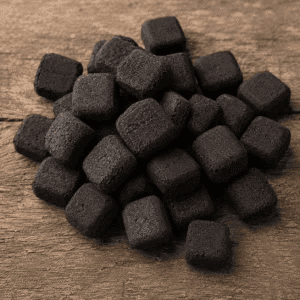
- Briquettes: compressed and generally uniform in shape.
- Raw material: lump charcoal commonly uses hardwood, while briquettes can use charcoal fines or other approved biomass materials.
- Production: both require controlled processing to create a usable cooking fuel.
Heat, Burn Time, and Flavor
One of the most noticeable differences between Hardwood Lump Charcoal and briquettes is how they behave during cooking. Lump charcoal can ignite relatively quickly and reach high cooking temperatures, making it useful for grilling applications that require strong direct heat.
Briquettes are designed for consistent shape and predictable burning. Their uniform size can make temperature management easier during longer cooking sessions, particularly when a steady heat level is more important than rapid temperature changes.
Flavor is another consideration. Hardwood Lump Charcoal can provide a natural smoky character that many barbecue enthusiasts associate with traditional wood-fired cooking.
- Heat response: lump charcoal often responds quickly to airflow adjustments.
- Burning pattern: briquettes can provide a more uniform burn due to their consistent shape.
- Smoke profile: the flavor depends on the raw material, production method, and cooking conditions.
- Ash production: ash levels vary according to charcoal type and formulation.
Choosing the Right Charcoal
The right fuel depends on the cooking application rather than simply choosing one product over another. Restaurants focused on high-temperature grilling may value the rapid heat and natural wood characteristics of Hardwood Lump Charcoal.
For slow cooking or situations where predictable fuel size is useful, briquettes may offer practical advantages. Buyers should also consider grill design, cooking duration, storage conditions, and purchasing volume.
When evaluating charcoal, consider these factors:
- Required cooking temperature
- Expected cooking duration
- Preferred smoke and flavor characteristics
- Charcoal size and consistency
- Ash production and cleanup requirements
- Packaging and storage conditions
- Availability and purchasing volume
Hardwood Lump Charcoal for Commercial Buyers
For restaurants, BBQ businesses, hotels, catering companies, and distributors, charcoal selection also involves supply reliability. Consistent product specifications, packaging options, export preparation, and communication with suppliers can influence purchasing decisions.
Hardwood Lump Charcoal can be particularly suitable for businesses that want a natural-looking fuel with strong grilling performance. However, commercial buyers should request product specifications and samples before placing large orders.
Important specifications to discuss with a supplier include:
- Hardwood species and raw material source
- Moisture and ash specifications
- Fixed carbon requirements
- Piece size and grading
- Packaging and private-label options
- Minimum order quantity and shipping requirements
For additional background about charcoal and related carbon materials, buyers can consult this trusted reference. Businesses interested in sourcing can also visit our website to explore available charcoal solutions from CV BERKAH WIJIL.
Conclusion
Hardwood Lump Charcoal and briquettes both have valuable applications, but their characteristics are different. Lump charcoal is often chosen for fast heat, natural wood characteristics, and high-temperature grilling, while briquettes are valued for uniform shape and predictable burning.
By comparing raw materials, heat performance, burn duration, flavor, ash production, and supply requirements, buyers can select the fuel that best matches their application. For commercial sourcing, clear specifications and consistent quality should remain key considerations.
Direvisi oleh adminDG
Related Posts
5 Critical Quality Metrics for Premium Charcoal Briquettes
-
Posted by
 amirrehman98@gmail.com

7 Essential Tips for Choosing the Best Charcoal Briqquetes for Shisha and BBQ
-
Posted by
amirrehman98@gmail.com
How Charcoal Briquettes Are Made: 7 Premium Production Steps
-
Posted by
amirrehman98@gmail.com
5 Reasons Coconut Shell Charcoal Briquettes Outperform Wood Fuel
-
Posted by
amirrehman98@gmail.com
7 Tips Coconut Charcoal Briquettes untuk Shisha dan Hookah
-
Posted by
amirrehman98@gmail.com

Hardwood Charcoal vs Coconut Charcoal 2026: Which Is Better?
-
Posted by
amirrehman98@gmail.com
7 Powerful Tips for Choosing Charcoal Cube Briquettes
-
Posted by
amirrehman98@gmail.com
7 Expert Tips for Choosing Charcoal for Commercial BBQ
-
Posted by
amirrehman98@gmail.com
Coconut Charcoal Briquettes: 7 Powerful Key Differences
-
Posted by
amirrehman98@gmail.com
Charcoal Premium 2026: Price Guide & Trusted Suppliers
-
Posted by
amirrehman98@gmail.com
7 Premium Hardwood Charcoal Briquettes Tips for Commercial BBQ
-
Posted by
amirrehman98@gmail.com
7 Powerful Charcoal Sticks Tips for Better Grilling
-
Posted by
amirrehman98@gmail.com