
Blogs
Coconut Charcoal: 7 Premium Uses & Benefits Explained Today

Table of Contents: coconut charcoal uses
Coconut Charcoal: Uses, Benefits, and How It Is Made
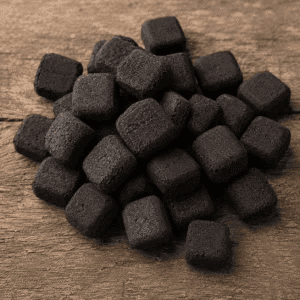
Coconut Charcoal is a fuel material produced primarily from coconut shells. It is widely used for applications such as shisha, hookah, and BBQ because properly processed charcoal can provide consistent heat and convenient handling.
Unlike charcoal made from freshly harvested wood, coconut-based charcoal gives useful value to coconut shells that would otherwise become agricultural waste. This makes its production an interesting option for businesses looking for alternative fuel materials.
How Is It Made?
The production process starts with carefully selected coconut shells. The shells are dried and then carbonized under controlled conditions to reduce moisture and convert the organic material into charcoal.
After carbonization, the material can be processed into different forms depending on its intended application. For shisha and hookah markets, manufacturers commonly produce uniform briquettes that are easier to package, transport, and use.
- Shell selection and preparation
- Drying to reduce excess moisture
- Controlled carbonization
- Crushing and screening when required
- Mixing and briquette forming
- Drying, quality inspection, and packaging
Main Uses
One of the most recognized applications of Coconut Charcoal is shisha and hookah. Briquettes are valued for their ability to provide a steady heat source when manufactured and handled correctly.
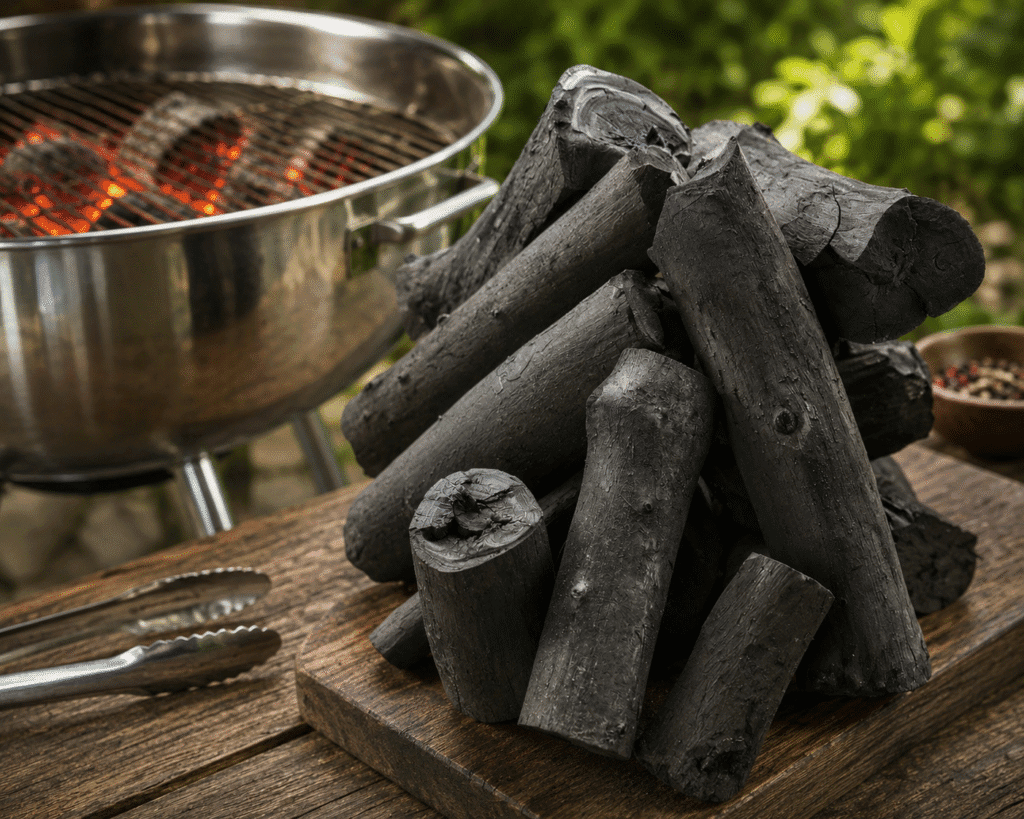
It is also used for BBQ applications. Restaurants, food businesses, distributors, and household consumers may choose coconut shell-based fuel when they want a practical charcoal option for cooking and grilling.
- Shisha and hookah fuel
- BBQ and grilling
- Food-service applications
- Wholesale fuel distribution
- Private-label charcoal products
Key Benefits
A major benefit of Coconut Charcoal is its raw material source. Using coconut shells creates a productive use for a by-product of the coconut industry, while consistent processing can help manufacturers achieve predictable product characteristics.
Another advantage is the possibility of producing standardized briquettes. Uniform dimensions can simplify packaging, storage, portioning, and distribution for commercial buyers.
- Uses coconut shell by-products
- Suitable for various fuel applications
- Can be formed into standardized briquettes
- Convenient for wholesale packaging
- Suitable for international distribution when specifications are met
Buyers should remember that performance depends on production methods and specifications. Moisture, ash content, density, fixed carbon, burn time, and briquette dimensions can all influence the final product.
Important Quality Factors
When purchasing Coconut Charcoal, businesses should request clear product specifications from their supplier. Quality documentation can help buyers compare products and determine whether a particular grade fits their market.
Important specifications may include moisture percentage, ash content, fixed carbon, calorific value, density, size, shape, and packaging. Buyers can also request samples before placing larger wholesale orders.
For general background about charcoal and its production, readers can explore Wikipedia as an external reference. For commercial information and product inquiries, visit CV BERKAH WIJIL.
Choosing a Reliable Supplier
A reliable supplier should be able to explain its raw materials, manufacturing process, product specifications, packaging options, and order requirements. Clear communication is especially important for importers and distributors purchasing in larger quantities.
Before ordering Coconut Charcoal wholesale, consider asking about minimum order quantities, available briquette sizes, packaging, production capacity, quality control, and export experience. These details can help businesses plan purchasing and logistics more effectively.
For buyers targeting the international market, consistency is particularly important. A supplier that maintains documented specifications and communicates clearly can make product evaluation and repeat purchasing more straightforward.
Conclusion
Coconut Charcoal has applications across shisha, hookah, BBQ, and commercial fuel markets. Its production begins with coconut shells and involves controlled carbonization, processing, forming, drying, and quality inspection.
Understanding how it is produced and which specifications matter can help buyers make more informed purchasing decisions. For businesses seeking a dependable supply partner, reviewing product samples and technical specifications is an important step before committing to a wholesale order.
Direvisi oleh adminDG
Related Posts
7 Reasons Coconut Shell Charcoal Briquettes Power Shisha Lounges
-
Posted by
 amirrehman98@gmail.com
5 Reasons Coconut Charcoal Briquettes Are the Future of Clean Fuel
-
Posted by
amirrehman98@gmail.com
5 Critical Quality Metrics for Premium Charcoal Briquettes
-
Posted by
amirrehman98@gmail.com
5 Reasons Pure Coconut Shell Charcoal Outperforms Wood in Hookah
-
Posted by
amirrehman98@gmail.com
5 Top Reasons Coconut Charcoal Briquettes Rule Shisha Lounges
-
Posted by
amirrehman98@gmail.com
5 Reasons Coconut Shell Charcoal Briquettes Power Ultimate Hookah
-
Posted by
amirrehman98@gmail.com

7 Essential Tips for Choosing the Best Charcoal Briqquetes for Shisha and BBQ
-
Posted by
amirrehman98@gmail.com

5 Top Reasons Shisha Lounges Prefer Coconut Shell Charcoal Briquettes
-
Posted by
amirrehman98@gmail.com
How Charcoal Briquettes Are Made: 7 Premium Production Steps
-
Posted by
amirrehman98@gmail.com
7 Best Reasons Coconut Charcoal Briquettes Elevate Lounge Heat
-
Posted by
amirrehman98@gmail.com
Coconut Charcoal vs Wood Charcoal 100% Best Comparison
-
Posted by
amirrehman98@gmail.com
5 Reasons Coconut Shell Charcoal Briquettes Outperform Wood Fuel
-
Posted by
amirrehman98@gmail.com